The Day Dolly Bolted — and Chose Connection Over Panic
This post is part of the Elise & Dolly Trust Series Part 1 of 3
Some moments stay with you forever. This one is etched into me.
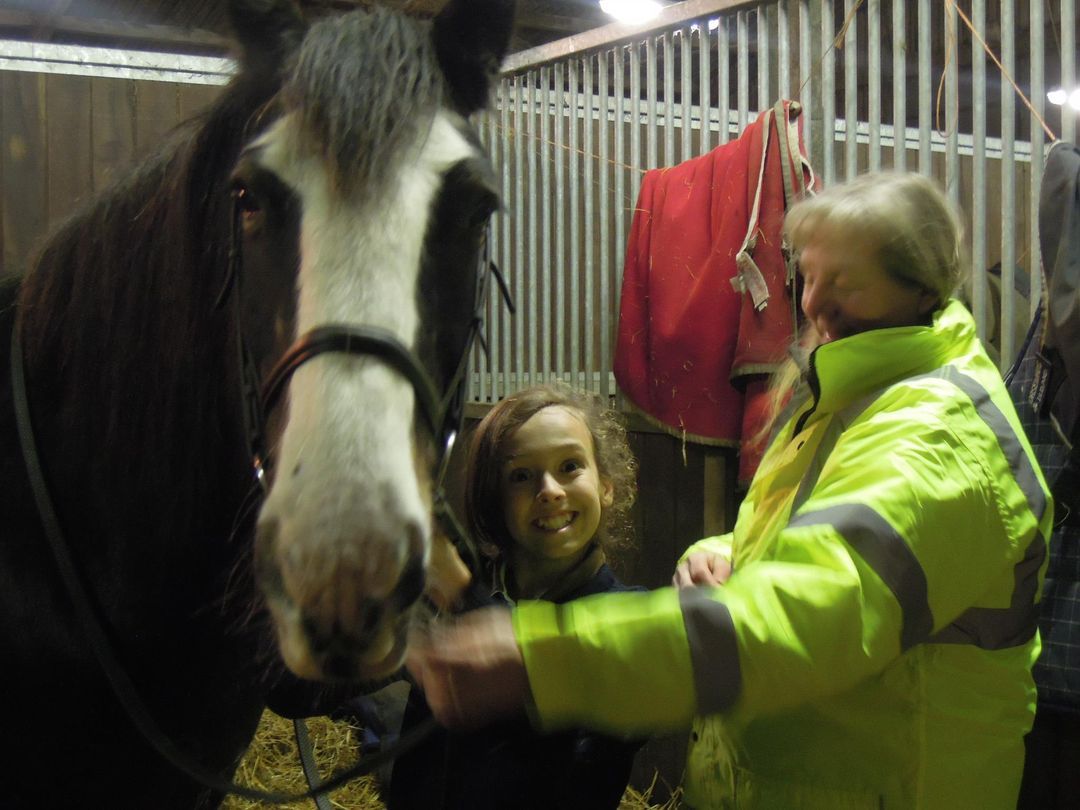
We were only meant to be giving Elise — a tiny twelve‑year‑old slip of a girl, barely four and a half stone — a short, easy hack on Dolly. Dolly, my 15.3hh Clydesdale‑cross Gypsy Cob, carried her as gently as if she knew exactly how small her rider was. They’d spent Sundays together in the school, building connection, learning each other’s rhythms, and now they both wanted a little more adventure. So, Elise’s mum and I walked with them down the road, watching Elise trot back and forth, calm and confident, doing beautifully for a child her age. When we reached the field track, I told her she could have a canter — as long as she stayed in sight. She set off… and then a bird-scarer exploded behind the hedge.
It made all of us jump.
Dolly shot forward. A natural reaction. If I’d been riding, loose reins would’ve given her space to process the noise and realise she was safe. But Elise had been taught the standard riding-school way: keep a contact, pull to slow down. She did the only thing she knew. Dolly, already startled, felt that pressure as pain, and it pushed her fear higher and a startle became a true bolt — the kind that takes horse and rider out of sight in seconds.
As she disappeared up the track, my stomach dropped. For a moment I thought, I’ve trusted too far. I’ve lost them both.
I shouted, “Ease your reins!” hoping it would give Dolly a chance to think instead of flee.
And then something happened that I still struggle to put into words.
Dolly heard my voice.
She didn’t keep running. She didn’t vanish into the distance. She didn’t do what bolting horses are supposed to do.
She turned.
A huge, sweeping arc across the field — heading back towards me, back towards the place where the frightening sound had come from, simply so she could find me. Elise was hanging on with astonishing instinct, softening her hands as best she could, doing everything she could to stay balanced.
Dolly’s eyes were locked on me the whole time.
I kept my voice low and steady. “Good girl, Dolly… steady…”
She eased to a fast trot, powered right up to me and stopped, trembling, blowing hard, shock and adrenaline pouring through her. Judi went straight to Elise, who was shaken but safe. I stood with Dolly, breathing slowly so she could follow my rhythm and let the fear drain out of her body.
And I just kept saying it, over and over as we walked back to the barn:
“I can’t believe she did that.”
Because horses that bolt don’t do that. They don’t loop back. They don’t choose connection over escape. They don’t run towards the place where the fear began.
But Dolly did.
Confused, frightened — and still searching for her person as her safest place.
It remains one of the clearest demonstrations of trust I’ve ever witnessed. A reminder that “control” doesn’t guarantee safety. Connection does.
And Elise? She was extraordinary. Most riders get thrown backwards when a horse bolts. Panic takes over. But Elise stayed soft, stayed centred, and worked her way back into the saddle. She rode with instinct far beyond her years.
That was the only time Dolly ever bolted in the ten years I owned her.
And the day she proved, beyond any doubt, that trust can override fear in ways most people would never believe — unless they saw it with their own eyes.
