When Trauma Shapes Behaviour
What Flash Taught Me About Horses, Bullying ,and Trust.
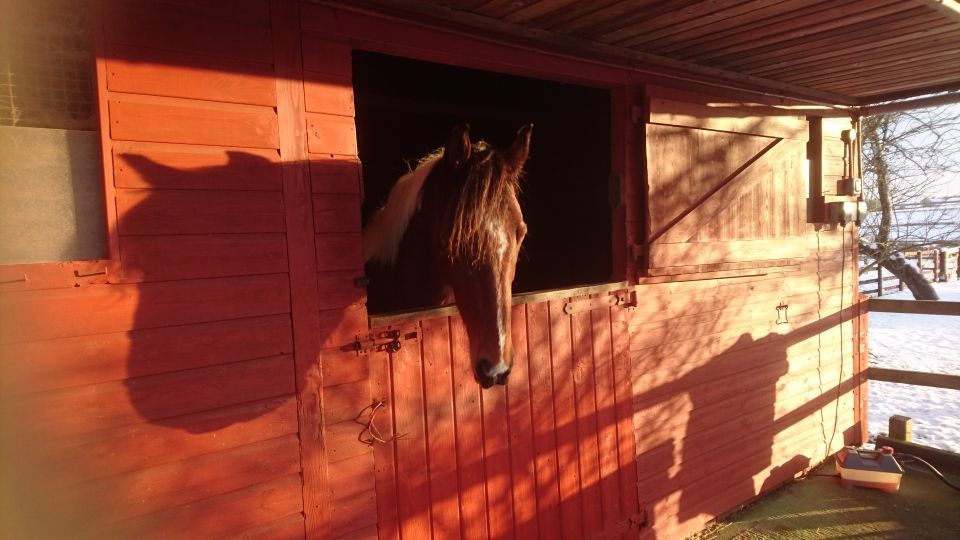
Some horses arrive in our lives not to be owned, ridden, or trained, but to teach us something deeper about behaviour, fear, and survival.
Flash was one of those horses.
I had been told that when the time came I could have him if I wanted, on the understanding that I would never try to ride him. In truth, taking him on financially would have been unrealistic, and I knew that. But I was drawn to him in a way that was difficult to explain. He was nervous in situations that should have felt safe, unpredictable at times, and clearly living with something he did not understand himself.
What I saw in Flash was not a dangerous horse.
I saw a horse living with trauma.
I believed his explosive behaviour was not aggression or defiance, but flashbacks from early rough handling and training. The most worrying part was that he could not warn you, because he did not always know himself that something was about to trigger fear.
And in this horse, I saw something very familiar.
I saw me.
Many years ago, before I met my husband and before I met Dolly, I lived in a relationship that was built on control and intimidation. It did not begin that way. It never does. But over time, the pattern became clear: things were done his way or not at all.
I learned quickly what not to do.
I learned not to challenge.
I learned to predict moods and reactions.
I learned to stay quiet to avoid punishment.
In effect, I became trained.
Not trained through understanding, but trained through fear and consequence.
Living like that creates a constant state of alertness, where your mind is always scanning for danger, always trying to anticipate what is expected so that you do not trigger a negative reaction. The body learns to survive by guessing, adapting, and avoiding conflict.
This is trauma.
And it is not very different from what many horses experience in traditional training systems.
Years ago, I heard a description that has stayed with me ever since:
Imagine being taken away from everything familiar and placed somewhere you do not understand, surrounded by strangers speaking a language you cannot comprehend. They ask you to do things, but you do not know what they want. When you guess wrong, they hit you and repeat the request, and you are expected to try again.
For a human, this would feel like a nightmare.
For many horses, it is their introduction to the human world.
Flash helped me see this more clearly than ever before.
People often say that working with unpredictable horses is dangerous and foolish, and they are right to be cautious. Safety always matters. But what Flash needed was not control, force, or pressure. What he needed was space, calm, and someone who expected nothing from him.
When I spent time with him, there was no agenda.
No training plan.
No goals.
No expectations.
Just presence, calmness, and consistency.
I explained to him that I was not the person who could take him forward long term. I would be in my seventies when he was an old horse, and realistically, he was not mine to keep. But in those quiet moments, the connection that developed was based on something simple: peace.
What Flash seemed to ask for was not performance.
He asked to be heard.
And that is where one of the most important lessons of horse listening begins.
Trauma does not disappear through pressure.
It softens through safety.
When a horse begins to feel safe, their nervous system settles. When their nervous system settles, they begin to understand the world around them. When they understand, they can adapt. When they adapt, trust begins to form.
Trust is not built through control.
Trust is built through emotional safety and consistency.
This is often misunderstood in the horse world. Listening to a horse is sometimes dismissed as being too soft, spoiling them, or allowing them to avoid work. In reality, listening is not about letting horses do whatever they want. It is about understanding the emotional and psychological state that sits behind behaviour.
A horse that feels safe can move forward.
A horse that feels threatened will survive.
Flash showed me that behaviour is often a language of past experiences, not a refusal to cooperate. His reactions were not deliberate disobedience; they were survival responses shaped by earlier experiences he could not forget.
In many ways, working with Flash mirrored healing from bullying.
Both require patience.
Both require calm environments.
Both require trust to rebuild slowly.
And both require someone willing to listen without judgement.
The lesson Flash gave me was simple but profound:
Horses do not ask us to make them athletes, competitors, or performers.
They ask us to understand who they are and what they have lived through.
When we listen, they begin to feel safe.
When they feel safe, they begin to trust.
And when trust grows, behaviour changes naturally.
Flash did not need fixing.
He needed peace.
And in offering him peace, he reminded me that the human-horse connection is not built on control or dominance, but on empathy, understanding, and emotional safety.
That is the foundation of ethical horsemanship.
